
流金岁月
China’s ‘Xuelong 2’ begins first ice station survey in central Arctic Ocean_我的网站

一 | 记者4月18日从农业农村部南亚热带作物中心了解到,我国现已基本探明国内主要热带作物地理分布和富集程度,收集保存包括野生近缘种、地方特色品种、珍稀濒危品种在内的热带作物种质资源4.8万份。 农业农村部南亚热带作物中心相关负责人说,我国热带作物种质资源保护利用项目自2008年实施以来,聚焦种质资源收集保存、鉴定评价、创新利用等工作,取得明显成效。
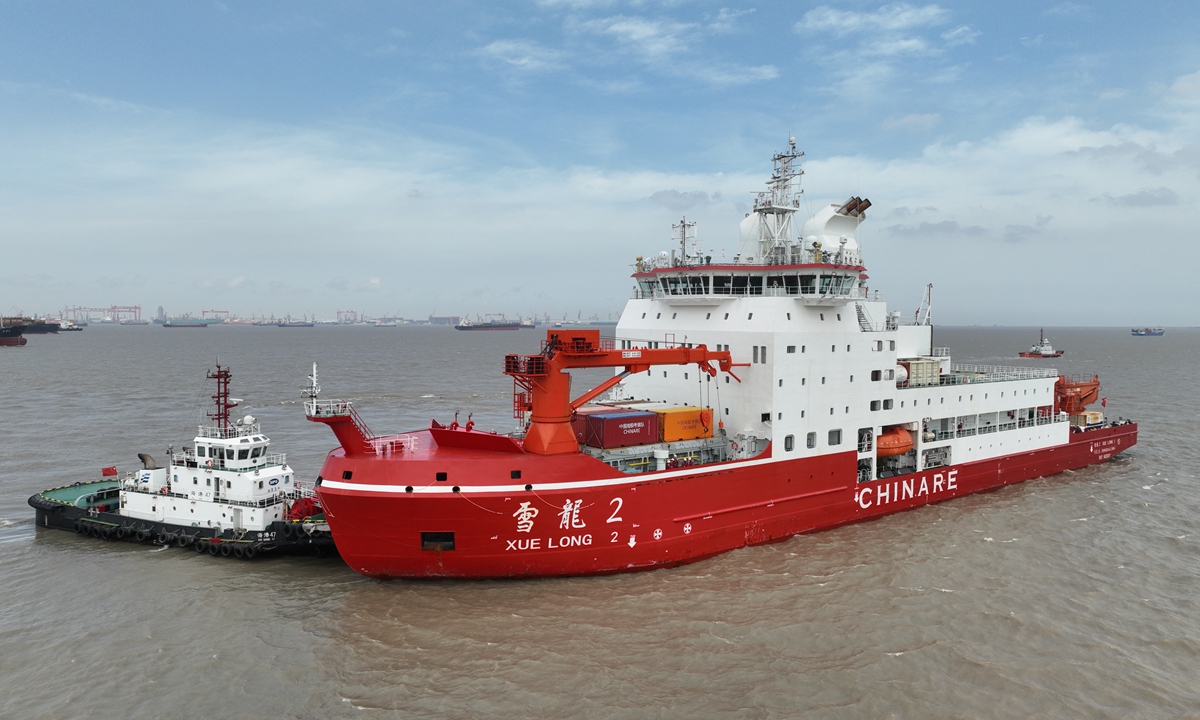
After completing the first stage of comprehensive ocean station surveys on Friday, Xuelong 2 sailed toward higher latitudes and selected a large, relatively flat piece of sea ice about 1.5 meters thick in a densely packed ice zone for its first ice station.
According to Lin Long, captain of the Xuelong 2 sea ice team, the ice station survey conducted by the vessel during this voyage will include six short-term ice stations and one long-term ice station, the Xinhua News Agency reported Sunday.
More than 20 types of scientific operations will be carried out, including the deployment of expendable ice-based buoys, snow and ice-core sampling, under-ice water sampling, sea-ice remote sensing, atmospheric profiling and under-ice oceanographic observations.
Lan Musheng, assistant to the chief scientist of the expedition, said the researchers will comprehensively monitor changes in parameters related to the atmosphere, sea ice, upper ocean and ecological processes beneath the ice as the sea ice melts.
The observations will provide scientific data for studying the rapid changes in Arctic sea ice, the mechanisms behind those changes and the evolution of Arctic ecosystems.
The ice station work is part of China's 16th Arctic Ocean scientific expedition, which was organized by the Ministry of Natural Resources. The expedition set sail from Dalian, Northeast China's Liaoning Province on July 3.
The mission is being carried out by four vessels - Xuelong, Xuelong 2, Jidi and Tansuo-3 - and is expected to be completed in early October.
The expedition is focusing on comprehensive surveys of sea ice, hydrology, biology, ecology and the atmospheric environment in key areas of the Arctic Ocean.
The two icebreakers Xuelong and Xuelong 2 will work together on the ice station surveys. Xuelong completed surveys at 12 ice stations on Friday.
Lin said the ice station locations planned for Xuelong 2 will work in coordination with those of Xuelong to form an observation array.
The arrangement will allow researchers to more deeply investigate the interactions among the atmosphere, sea ice and ocean in the central Arctic Ocean amid rapid environmental changes, as well as their coupling effects with the ecosystem.
The expedition is being conducted against a backdrop of rapid changes in the Arctic environment.
When the mission was launched in July, expedition leader Wang Jinhui said that global warming was driving rapid and profound changes in the Arctic natural environment, with trends such as sea-ice melting intensifying.
The expedition is therefore designed not only to monitor environmental changes but also to investigate frontier scientific questions, including the dynamic evolution of the oceanic crust.
Working on sea ice also presents significant safety challenges. Low temperatures and complex ice-surface conditions can pose risks to researchers, while polar bears are considered the biggest safety risk during ice station operations.
The expedition team has therefore formulated specific bear-prevention and emergency response plans and equipped personnel with various types of bear-deterrence equipment and emergency supplies to ensure their safety.
。 具体来看,我国围绕橡胶树、木薯、热带木本油料、热带果树等重点热带作物建立了一批种质资源圃和创新基地,制定了咖啡等一批热作种质资源描述规范和收集保存、鉴定技术规程,在优异基因发掘、分子鉴定、标记开发、高密度遗传图谱构建等方面取得突破性进展,育种效率不断提高。 这位负责人表示,下一步将积极推动热带作物种质资源收集整理、精准鉴定评价和创新利用工作,推进生物育种产业化应用,服务产业升级需求。同时,在海南、云南等热带地区配合开展创新成果展示示范活动,提升热带作物种质资源保护与利用成果转化效益。 据悉,截至目前,橡胶树、香蕉累计登记品种数40余个,被授予了一批热带作物新品种权,热带作物品种审定80个以上,具有自主知识产权的新品种在实际生产中得到广泛推广应用,为推动热带作物产业高质量发展发挥了重要作用。(郁琼源、李昌瑞)。

二 |
Current article:http://24bgi.wenwancaomohenenqiongpangshun.bond/01k0/20260826/4459.html
Published on:00:00:00
[责任编辑: 辛通辛]
评论
-
关于我们 | 我的网站 版权所有
Copyright ? 2019 我的网站 All Rights Reserved